Updated 2026-08-29 · 12 min read
Seoul subway elevators: what to expect
How Seoul Metro accessibility usually works: street elevators versus the tourist-map exit, transfers, boarding ramps, wheelchair lifts, and why we still mark transit Unknown on many place pages.
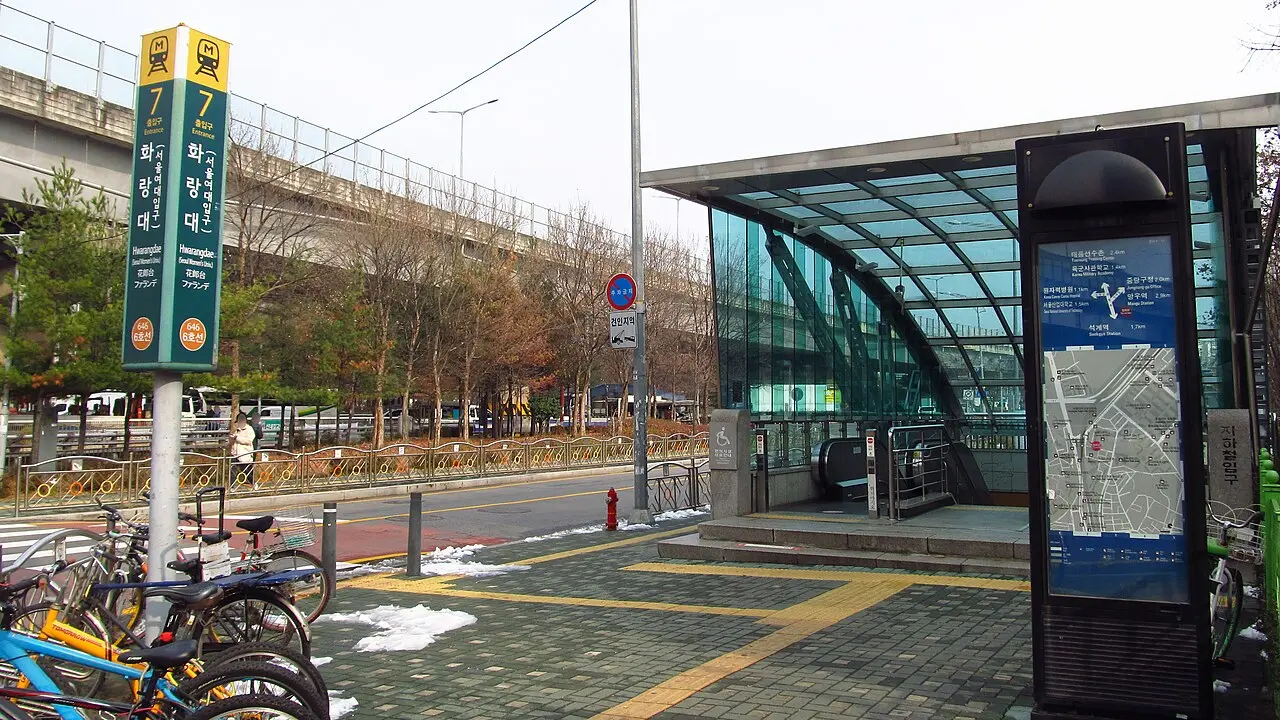
Elevators exist — finding them is the work
Visit Seoul’s official accessibility guide says nearly all of Seoul’s subway stations can be reached by elevator, with multilingual signs and announcements. That is true at the network level. It is not the same as “the exit printed on a palace brochure has an elevator.”
Plan for the easiest exit, not the closest. Street-level elevator cabins are often glass boxes set a little apart from the numbered stairs. Visit Seoul notes that their placement is not always intuitive because many were retrofitted into older stations. The last 200 metres above ground — curb ramps, shop thresholds, palace stone — can undo a good train ride.
How a typical station is layered
Most central stations are stacked: sidewalk → concourse / ticket gates → platform. Visit Seoul’s rule of thumb is one elevator from street to ticketing, then another from ticketing to platform. If an elevator on the platform or street has a transit-card reader, it may travel the full height — read the sign, do not assume.
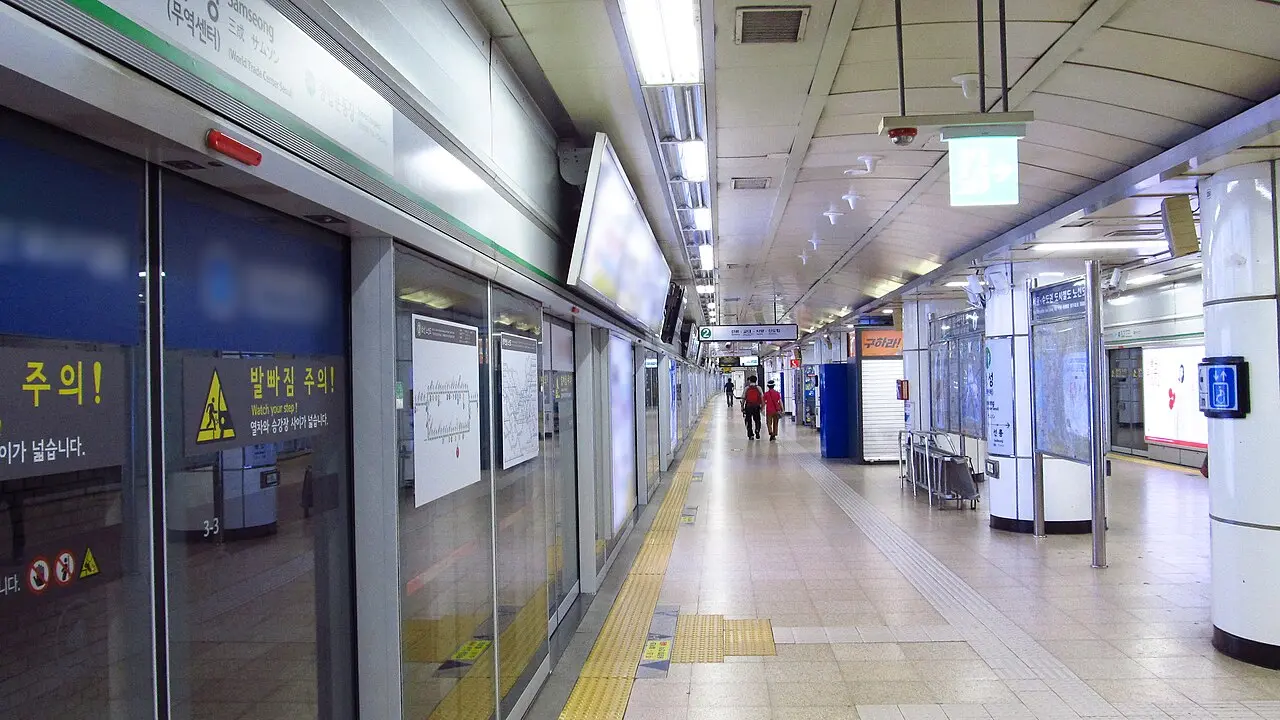
All Seoul subway stations have platform screen doors. Gaps between platform and car still vary. Staff can place a portable boarding ramp (안전발판). Learn a short Korean line or keep a card: “휠체어 안전발판 부탁합니다” (Please place the wheelchair boarding ramp).
Gates, cars, and extras
Older stations still have turnstiles plus a wider wheelchair gate; tap your card on the sensor. Newer stations often have gateless wide aisles. Every car has priority seating; Visit Seoul says large green floor marks show which cars are the accessible ones with space to park a wheelchair.
Many stations also have accessible restrooms, braille blocks, and — increasingly — rapid chargers for power wheelchairs. Seoul Metro publishes facility lists (elevators, lifts, chargers, restrooms) as open data. Those feeds are operational, not tourist copy, and they change when a lift is out of service.
Transfers take longer than the map suggests
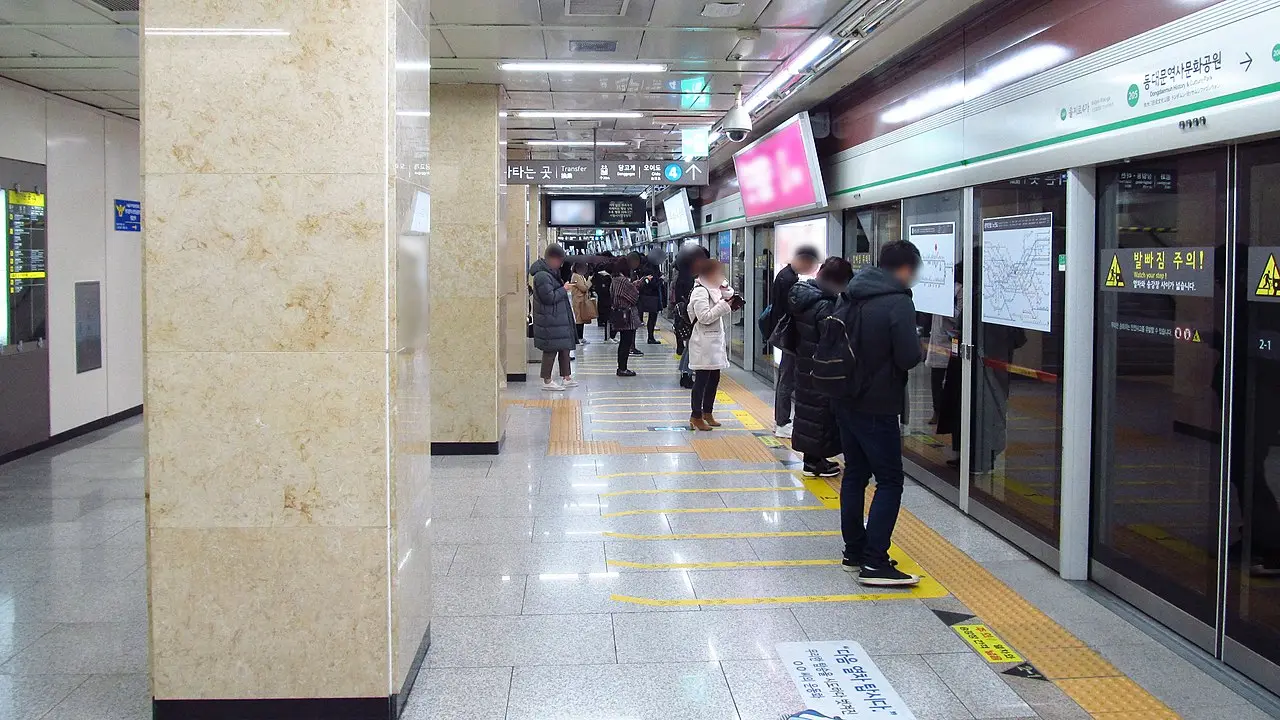
Interchange stations such as Seoul Station, City Hall, Jamsil, and Dongdaemun History & Culture Park can mean long corridors and extra elevator rides. Budget time, especially with a power chair that needs a full turning circle in front of a small elevator.
If a transfer still depends on a wheelchair lift instead of an elevator, that is a different experience — slower, staff-operated, and often impractical for a heavy power chair. Visit Seoul’s own advice is to avoid stations where a lift is the only accessible facility when you can.
How Korea Access Check uses this
Place pages mention nearby lines when official tourism data includes them. We still mark transit as unknown or partial when elevator exit numbers are missing from that source. That is intentional: a KTO sentence that says “subway nearby” is not an elevator map.
For live outages, use Seoul Metro / Seoul Transportation Corporation tools and station staff. This site does not poll elevator status.
Visit Seoul notes wheelchair-accessible ticket gates and vending machines for transportation cards for people with disabilities. You still need a stored-value card (T-money and similar) to tap. Korean welfare-card fare products are a different system — a foreign passport does not automatically get the same discount.
If an elevator is out, or a transfer is lift-only, switch to a booked van rather than forcing the interchange. Yellow accessible taxis wait; Danurim is not a same-day hail. See /guides/danurim-accessible-taxis-seoul.